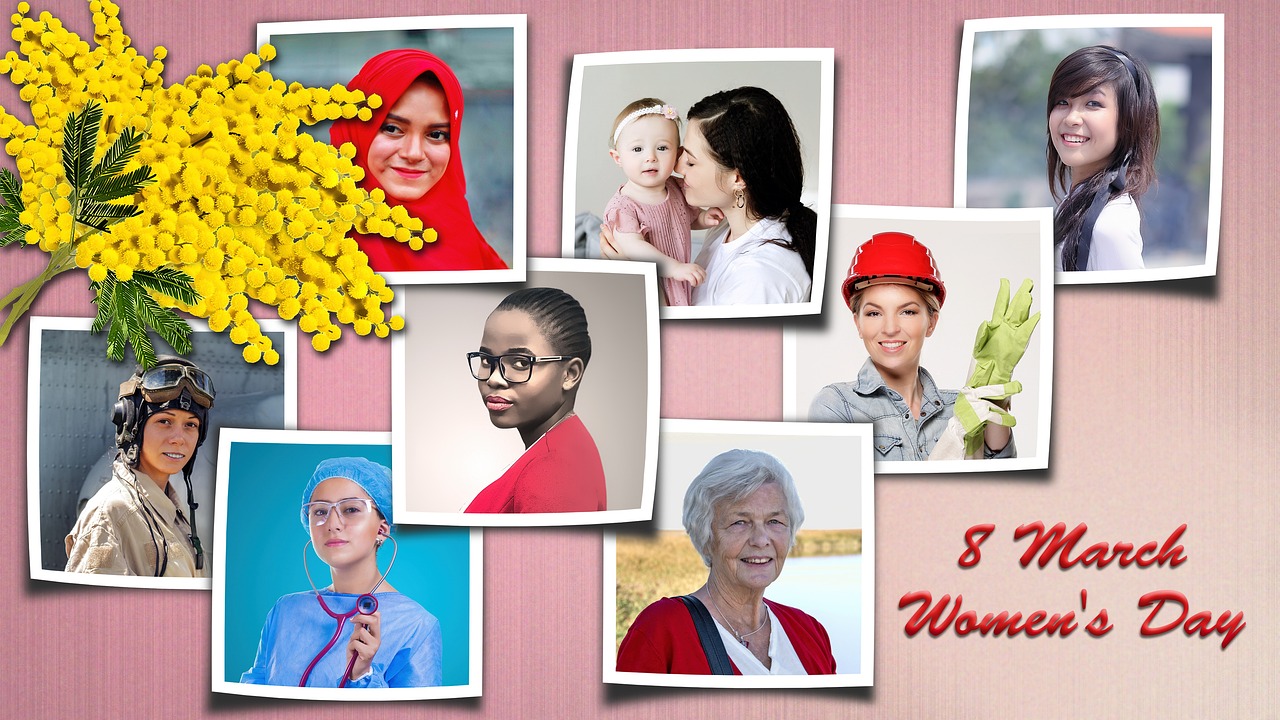
March 8th is a worldwide day to celebrate women and their contributions to their societies and cultures. This tradition actually began on February 28, 1909, in the United States, to commemorate and honor the women protesting for better working conditions in a garment workers’ strike in New York City that happened in 1908. But according to the United Nations website, the women’s movement in the US had already begun in 1848, when Elizabeth Cady Stanton and Lucretia Mott gathered a few hundred people at their first women’s rights convention in New York and drafted a Declaration of Sentiments and Resolutions to demand civil, political, religious, and social rights for women. The United Nations designated March 8th as International Women’s Day in 1975, according to the ONU Italia website. Every year there is a set theme; for 2025 the United Nations’ theme for the day is “For ALL Women and Girls: Rights. Equality. Empowerment.” ONU Italia, however, states that this year’s theme is “Le donne in un mondo del lavoro in evoluzione: verso un pianeta 50-50 nel 2030” (“Women in an evolving work environment: towards a 50-50 planet in 2030”); ONU Italia specifies that this is to link to and foster the Agenda 2030 for worldwide sustainable development. There is also a site called internationalwomensday.com which states that “IWD is not country, group, or organization specific.” They state that the 2025 theme for the day is “Accelerate Action.” The first commemoration of Women’s Day in Italy took place in 1922. But in 1945 it took on a special meaning, as the Unione Donne in Italia (the UDI) commemorated the day in the areas of the peninsula that had already been liberated.
La festa della donna in Contemporary Italy
With the increase in crimes against women (femminicidio) and the continued disparity in wages, there are still some groups that organize actions on this day. The ONU Italia site states that from March 8 through 12, 2025, in 50 Italian cities, Amnesty International and Altromercato (Italy’s largest alternative trading organization with several brick and mortar outlets as well as online shopping) will be hosting initiatives and gatherings in public squares as well as participating Altromercato shop locations to highlight rights for women all around the world and to create” #unaltrovivere” (another way to live). But, overall, in Italy it is more of a cultural or social day nowadays, rather than political. If you’re a woman planning a trip to Italy, it would be great to go there for March 8th! To honor women on the day, the Italian Ministry of Culture offers free admission to all museums, archeological parks, monuments, castles, villas and gardens; a few of them not to miss: the Parco archeologico del Colosseo in Rome, the Pinacoteca Nazionale di Bologna, Parco archeologico di Pompei. In fact, the Parco Giardino Sigurtà, a botanical garden in Valeggio sul Mincio in the province of Verona, even offers discounted admission to the men! Generally, florist shops make lovely bouquets of mimosas, sometimes with other flowers (such as orchids or roses), at different price points for people to give to the women in their lives. The fuzzy yellow mimosa (the flower, not the drink!) is the official flower of this day.
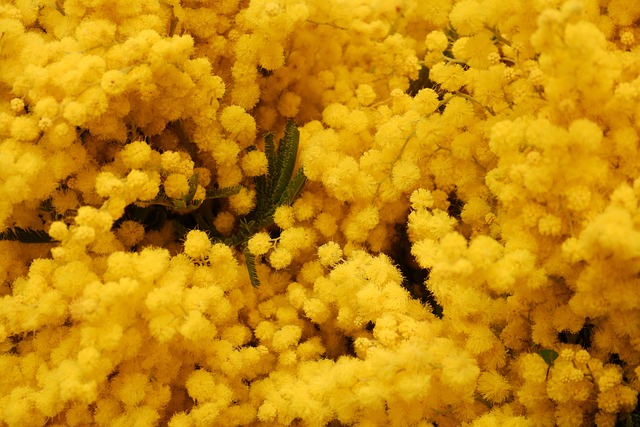
Why do Italians Give Mimosas on Women’s Day?
Just as daffodils and crocuses are the harbingers of spring in the northern US, so too does the mimosa herald spring in Italy. In the language of flowers, mimosas represent strength, femininity, joy, humility. But also even though its blossoms seem fragile and soft, the plant (tree?) itself is tenacious and grows anywhere – like a robust weed, one might say. For the women who promoted it, the mimosa fully symbolized the condition of women in Italian society. The mimosa was adopted in Italy as the official Women’s Day flower thanks to the efforts of two women members of the UDI, Rita Montagnana (the wife of politician Palmiro Togliatti) and Teresa Mattei, who lobbied for this flower because it was also affordable, so everyone could give and receive a little bouquet.
Regardless of where you live, I hope you commemorate this day and all the achievements of women throughout the world by giving a woman you know (or yourself!) a little bouquet of spring! Buona festa della donna!
 Project-Based Italian