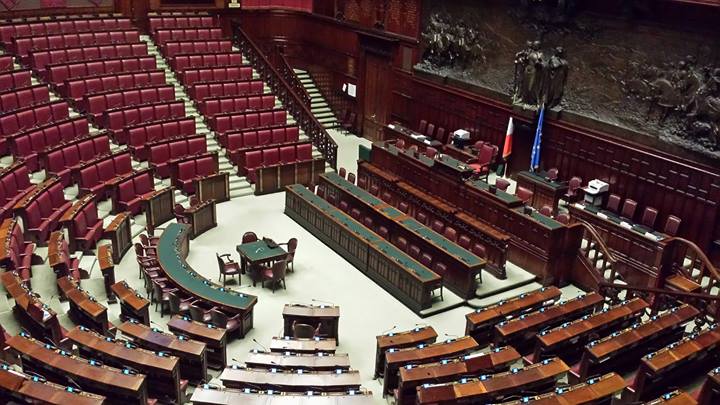
Giorgia Meloni, Prime Minister of Italy

On October 22, 2022 Giorgia Meloni took the oath of office as Italy’s first female Prime Minister. Born on January 15, 1977 in Rome, Meloni grew up in the Garbatella district of that district. Her father left the family when Meloni was young, so she grew up with a single mom. At age 15, Meloni joined the Movimento Socialista Italiano (MSI) which was a right-wing group that supported the Fascist ideas of Benito Mussolini. The MSI rebranded itself as the Alleanza Nazionale in 1994; Meloni became an active member of its student wing, the Azione Giovani, launching her meteoric rise to power. In 1998, at the age of 21, Meloni was elected councillor of the Province of Rome and at 27, in 2004, she became president of the right-wing Alleanza Nazionale’s youth movement, the Azione Giovani. By the time she was 29, she was a member of parliament, in the Camera dei Deputati (Chamber of Deputies), Italy’s lower house of Parliament. In 2008, at 31, Meloni became Minister for Youth, making her the record-holder for youngest ever minister of the Italian Republic. In 2012 she co-founded her current party, the far-right Fratelli d’Italia (Brothers of Italy) which currently governs the country, with her at its head as Prime Minister.
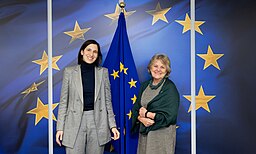
Elly Schlein, leader of the Partito Democratico, Italy’s second-largest political party
Elena Ethel Schlein, known as Elly, was born May 4, 1985, making her the youngest ever, not to mention the first female and first out LGBTQ+, leader of the PD, the Partito Democratico (Democratic Party). While Schlein is definitely progressive left (some might say “far left”) in her politics, the PD tends to be center-left in its politics. Leading the PD effectively makes Schlein Italy’s opposition leader, since the country is run by the far-right coalition government under Giorgia Meloni. Previously, Schlein served as Vice-President of the Emilia-Romagna region (which tends to be leftist in its political orientation) and as a deputy in the European Parliament. Schlein is unusual also in that she was born and raised in Lugano, the Italian-speaking canton of Switzerland, of an Italian mother and an American father. This gives her not only a broad international perspective, but also triple citizenship: Swiss by birth, Italian by her mother, and American by her father. She came to the United States, in fact, to work on both of former President Barack Obama’s presidential campaigns. Schlein’s current position in the Camera dei Deputati and as the head of the second-largest political party, makes her the counterweight to Giorgia Meloni’s traditionalist and far-right governing party.
Nilde Iotti, “Founding Mother of the Italian Republic”
Leonilde “Nilde” Iotti was born in Reggio Emilia (a city in the Emilia) on April 10, 1920. She died on December 4, 1999, in Rome, where she had worked tirelessly for the Italian Republic since the end of World War II. Every newspaper article and press release written about her carry either the headline or the mention of Iotti as “the founding mother” or “one of the founding mothers” of the Italian Republic because, having been an active partigiana (partisan) during World War II, at the end of the war in 1946 she was a member of the committee that drafted Italy’s Constitution as a Republic (from its previous government, since Unification, of constitutional monarchy); Iotti drafted the family policy enshrined in Italy’s Constitution. In 1948, she became a member of the lower house of Italy’s Parliament, the Camera dei Deputati. Later, she would serve as the longest-running President of the Camera dei Deputati, from 1979-1992; Iotti was the first-ever woman to lead the Camera dei Deputati. Before becoming the President of the lower house of Italy’s Parliament, Iotti also served as a member of the European Parliament for a decade, from 1969-1979. Her work with the pro-European Union movement did not end there, though: she was elected Vice-President of the Council of Europe, the human rights organization that includes 47 member states, in 1997. She believed fervently in a united and equal Europe. She fought diligently for women’s rights in Italy and in Europe throughout her life, serving as a member of the Partito Comunista Italiano (PCI) and co-founder with Tina Anselmi, after the war, of the Unione Donne in Italia (UDI), which you may remember from our previous post was the organization that first commemorated International Women’s Day in Italy, in 1945, as a day of solidarity among women (and possibly to celebrate that Italian women had gained the right to vote in that year as well). According to the European Union’s website on EU pioneers, Iotti “was often considered the ‘best president Italy never had’.”
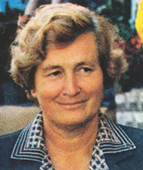
Tina Anselmi, First Female Italian Minister of Labor
Although gender equality was enshrined in the Italian Republic’s 1946 Constitution, it took 30 years before the Italian Parliament appointed its first female Minister, in 1976: Tina Anselmi. Anselmi was born in the Veneto region (Castelfranco Veneto, province of Treviso) on March 25, 1927. But she was just 17 years old on September 26, 1944, a student at the Istituto Magistrale (teacher’s institute/college) in Bassano del Grappa, when the Nazis made Anselmi and her classmates come out to watch the hanging of 31 young partigiani (Partisans)- and, actually, according to Anselmi’s own testimony it was actually a group of 43 Partisans. After that horrific episode, Anselmi joined the brigata Cesare Battisti of the Italian Resistance in which she served as a staffetta (courier), risking her life delivering messages between Partisan brigades and command posts, until she transferred to the Comando regionale veneto (Veneto Region Command) of the Corpo volontari della libertà (CVL), which was the military command structure of the Italian Resistance, even acknowledged and recognized as such by the Allies. A devout Roman Catholic all her life, Anselmi also registered as a member of the Democrazia Cristiana (Christian Democrats party) in 1944 (she was already a member of the Gioventù Femminile (GF), the women’s auxiliary of the Azione Cattolica); one could say she entered politics and became an activist on September 26, 1944. Though she remained a devout Catholic all her life, I think her upbringing with her father’s socialist ideology was a large part of her political DNA: she fought tirelessly for women’s rights all her life, as well as on issues on behalf of Catholic trade unions, minimum wage, family policy and health. In 1978, as the Italian Minister of Health, Anselmi signed Law N. 194, which granted women the right to abortion. According to the National Organization of Italian American Women, Tina Anselmi was “the mother of modern Italian democracy.” Tina Anselmi died of Parkinson’s in her hometown of Castelfranco Veneto on November 1st, 2016; she was 89 years old.
 Project-Based Italian