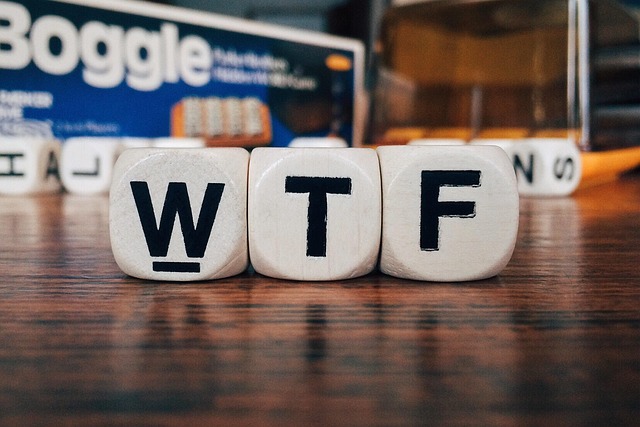
Dear First Year Teacher, keep calm and read on!
Anyone who has spent time in education – whether as a teacher, administrator, or curious parent – has likely encountered a bewildering parade of acronyms. In world language teaching especially, the jargon can feel like you need a decoder ring just to follow a department meeting. Here is a breakdown of the most common terms, why so many of them overlap, and the historical and political reasons the field can’t seem to agree on a single name for anything.
The Big Ones: What Are We Even Teaching?
Let’s start with the foundational question: what do we call a language that isn’t someone’s first?
L1 and L2 are perhaps the cleanest terms in the bunch. L1 refers to a person’s first language – the one acquired naturally at home in early childhood. L2 refers to any language learned after that, whether it’s a second, third, or fourteenth. These terms come from linguistics and are refreshingly free of political baggage.
FL (Foreign Language) is the traditional term used in American K-12 education. It implies that the language being studied is “foreign” – that is, not widely spoken in the student’s immediate community. Italian class in a predominantly English-speaking school in rural Ohio is FL instruction. The term is embedded in institutional names (the American Council on the Teaching of Foreign Languages, or ACTFL, is the dominant professional organization here in the U.S.) and in decades of curriculum frameworks.
WL (World Language) has largely replaced FL in contemporary American educational discourse, for a meaningful reason. “Foreign” carries an othering connotation, implying the language belongs to someone else, somewhere far away. “World language” feels more inclusive and globally minded, and it also better accounts for the reality that many students are learning a language that may be very much present in their own communities. Most U.S. state education departments now use WL officially, even though ACTFL has kept its name.
SL (Second Language) is a broader term borrowed from academic linguistics. It simply means any language beyond the first, without implying geographic or cultural distance. It tends to appear more in research contexts than in K–12 policy documents. SLA stands for Second Language Acquisition.
The Learner Acronyms: Who’s in the Room?
This is where things get especially crowded, because the population of students learning English has been labeled and relabeled repeatedly over the decades, often for political and philosophical reasons.
ESL (English as a Second Language) was the dominant term for generations. It refers both to the academic subject (an ESL class) and to the students themselves. Its limitation is the word “second” – for many students, English is actually their third or fourth language, making the label technically inaccurate. But, of course, as we saw above, L2 or Second Language is actually the linguistic term for a language an individual acquires after their native language, or L1.
EFL (English as a Foreign Language) is used primarily outside English-speaking countries. A student in South Korea learning English in school is in an EFL context. The distinction between ESL and EFL matters instructionally: ESL learners are immersed in English outside the classroom; EFL learners may have very little exposure to English beyond the lesson itself.
ELL (English Language Learner) emerged as a preferred replacement for ESL-as-student-label. It’s more precise – it describes what the student is doing (learning English) rather than implying English is necessarily their second language. It became widely used in U.S. policy and testing contexts in the late 1990s and 2000s.
EL (English Learner) is a shortened form of ELL, now preferred by the U.S. Department of Education and used in federal legislation including the Every Student Succeeds Act (ESSA). The logic is that “learner” is somewhat redundant – all students are learners – and the shorter form is cleaner for legal and administrative writing. Many states have officially transitioned from ELL to EL.
LEP (Limited English Proficient) is an older federal designation that is still used in some legal and civil rights contexts because it appears in older legislation. Most educators have moved away from it because “limited” is widely seen as a deficit-framing term – it describes what students lack rather than what they bring.
MLL (Multilingual Learner) is the newest entrant and is rapidly gaining traction. States like New York have officially adopted it. The rationale is that students who are learning English are not simply “English learners” – they are multilingual people whose home languages are assets, not obstacles. The term also captures the fact that these students may be developing literacy and fluency in multiple languages simultaneously.
DLL (Dual Language Learner) is used specifically for young children (typically birth through age 8) who are being raised with more than one language. It appears frequently in early childhood education and Head Start contexts.
Program and Approach Acronyms
SLA (Second Language Acquisition) is the academic field that studies how people learn additional languages. It’s the research base underlying most of what teachers do in WL and ELL classrooms.BICS and CALP are a pair coined by researcher Jim Cummins. BICS stands for Basic Interpersonal Communicative Skills – the conversational, social language that students tend to pick up relatively quickly, often within two years of immersion. CALP stands for Cognitive Academic Language Proficiency – the academic, discipline-specific language needed to succeed in school, which can take five to seven years or more to develop. This distinction is enormously important for teachers who may assume a student is “fluent” because they chat easily with peers, not realizing the student still struggles with academic texts.
TL (Target Language) simply means the language being learned or taught – whatever it is.
CLI (Comprehensible Input) and CI (Comprehensible Input) refer to the same concept from linguist Stephen Krashen’s Input Hypothesis: the idea that language acquisition happens when learners understand messages in the target language that are slightly above their current level. CI-based teaching is a significant movement in world language education that has generated both enthusiasm and controversy.
TPRS (Teaching Proficiency through Reading and Storytelling) is a specific CI-based methodology developed by Blaine Ray in the 1990s. It was originally called Total Physical Response Storytelling before the name was changed to better reflect the reading component.
TPR (Total Physical Response) is an older, related method developed by James Asher in the 1960s that uses physical movement to reinforce language. TPRS evolved partly from it, which explains the similar initials.CLT (Communicative Language Teaching) is the broad pedagogical framework, dominant since the 1980s, that emphasizes using language for real communication rather than drilling grammar rules in isolation.
TBI (Task-Based Instruction) or TBLT (Task-Based Language Teaching) is a branch of CLT that organizes lessons around meaningful tasks, like planning a trip, conducting an interview, or solving a problem, rather than grammar points.
ACTFL (the American Council on the Teaching of Foreign Languages) deserves its own mention because it’s the source of the OPI (Oral Proficiency Interview), a standardized assessment of speaking ability, and the Proficiency Guidelines, which define levels from Novice to Distinguished and serve as the foundation for most WL curriculum design in the U.S.
CEFR (Common European Framework of Reference) is the European equivalent, widely used internationally, with levels ranging from A1 (beginner) to C2 (mastery). American educators are increasingly familiar with it as language programs seek to align with international standards.
IPA (Integrated Performance Assessment) is an ACTFL-developed assessment model organized around three communicative modes: interpretive, interpersonal, and presentational. It should not be confused with the other IPA – the International Phonetic Alphabet – which is used by linguists to transcribe the sounds of any language.
DI (Differentiated Instruction) is a general education concept, not specific to language teaching, referring to adapting lessons to meet diverse learners’ needs. It appears constantly in any classroom context.
UDL (Universal Design for Learning) is a related framework for designing curriculum that is accessible to all learners from the outset, rather than retrofitting accommodations after the fact.
Why Are There So Many Synonyms?
The honest answer is that most of these overlapping terms exist for one of three reasons.
The first is geography and professional community. ESL, EFL, and ELL all describe variations on the same phenomenon but developed in different contexts – American K–12 schools, international language institutes, and policy offices – whose practitioners didn’t always talk to each other, so they developed their own terminology.
The second is politics and values. The shift from LEP to ELL to EL to MLL is not a story of scientific discovery; it’s a story of evolving beliefs about how we should frame the identities and capabilities of students. Each new term represents a community of educators pushing back against what they see as stigmatizing or inaccurate language. The shift from FL to WL reflects similar values-driven thinking.
The third is institutional inertia. ACTFL has “Foreign Language” in its name even though almost no one in the field uses that term approvingly anymore. Older federal laws still say “LEP” even though the field moved on. Changing official names is slow and costly, so old acronyms persist in legal and institutional contexts long after the field has shifted. Teachers end up needing to know both the old and new terms to navigate between their professional reading and their policy documents.
The result is a field where you can attend a conference session about supporting MLLs in a WL classroom using CI-based TBLT aligned to ACTFL Proficiency Guidelines and the CEFR, assess them with an IPA, and differentiate using UDL – and every one of those acronyms means something precise, even if it takes a few years of immersion to absorb them all. Appropriately enough, that immersion is pretty much how language learning works too!
 Project-Based Italian